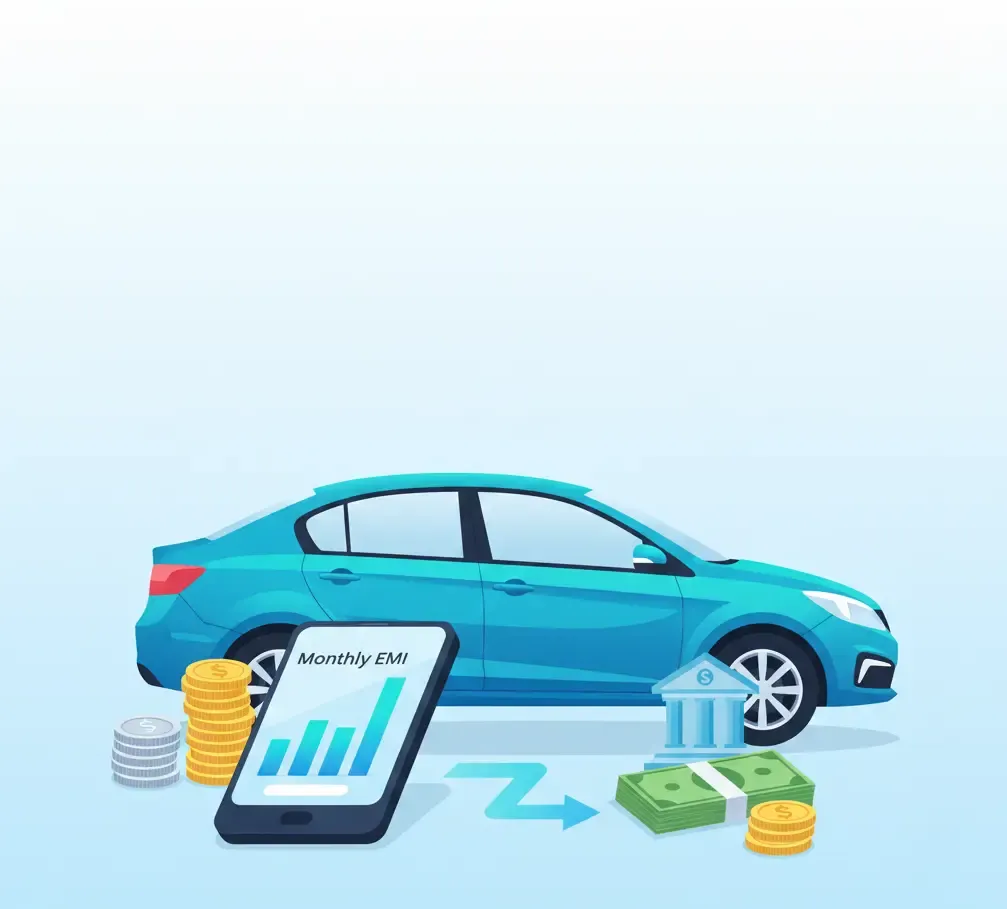
A Car EMI Is Only One Part of Ownership
A car loan often feels smaller than a home loan, so people approve it emotionally. The test drive is pleasant, the upgrade is tempting, and the difference between two models is presented as "only Rs 3,000 extra EMI." But cars depreciate, and ownership costs continue after the showroom excitement ends.
An Ahmedabad SUV Upgrade in Real Numbers
Mehul in Ahmedabad plans a Rs 13.5 lakh on-road SUV with Rs 2 lakh down payment. The loan is Rs 11.5 lakh for 7 years. The EMI is lower than a 5-year loan, but total interest becomes much higher. Add petrol, insurance renewal, service, tyres, and parking, and the real monthly cost is not the EMI. It is EMI plus ownership.
A Rs 9.5 lakh hatchback with a 5-year loan may leave him with more monthly freedom and still solve the actual need: reliable city transport.
The Showroom Trap Most Buyers Miss
Buyers compare cars by EMI difference instead of total cost. A long tenure hides the price of upgrading. Another mistake is accepting dealer finance without checking the salary bank or a public sector bank quote.
Some buyers also finance accessories and insurance into the loan. That means paying interest on items that lose value quickly or expire within a year.
Price the Car as Ownership, Not Just EMI
Decide the car budget before visiting the showroom. Keep the tenure as short as your cash flow can handle comfortably. Compare at least two lender offers and ask for the full on-road breakup, not just ex-showroom price.
Include annual insurance and fuel in the decision. A car that forces you to cut SIPs or carry credit card debt is not affordable even if the loan is approved.
Which Car Loan Choice Makes Sense
Choose a car loan when the vehicle supports work, family needs, or reliable commuting without damaging savings. Avoid stretching tenure only to buy a higher variant. If the upgrade is affordable only because the loan goes to 7 years, the upgrade is probably not affordable.
Tools for Vehicle Budgeting
The Final Takeaway
A car depreciates daily while your loan gathers interest monthly.
Suggested Action
Keep your auto EMI below 15% of your income to avoid being trapped by a depreciating asset.
The Real Cost of Buying a Car on Loan in India
A car purchase is the second-largest financial commitment most Indian middle-class families make, after a home. Yet it receives dramatically less financial scrutiny. Home loan decisions are typically made after weeks of research, bank comparisons, and careful EMI planning. Car loans are often decided in the showroom, under the influence of an eager salesperson, a sleek test drive, and a promotional finance offer from the manufacturer's captive lending arm.
The result is predictable: many Indian car buyers underestimate the total cost of their vehicle financing significantly — not the sticker price, but the complete cost including interest, insurance, registration, and the rapid depreciation that characterises the Indian used-car market. This guide makes those numbers visible before you sign.
How Car Loan EMI Is Calculated
Car loan EMI uses the same reducing-balance formula as home loans: EMI = [P × R × (1+R)^N] / [(1+R)^N – 1], where P is principal, R is monthly interest rate, and N is tenure in months. Unlike home loans, car loan tenures in India are shorter — typically 3 to 7 years — and interest rates are higher, ranging from approximately 8.5% to 12% depending on the lender, loan amount, creditworthiness, and whether the car is new or used.
On a Rs 8 lakh car loan at 9.5% for 5 years: EMI ≈ Rs 16,800 per month. Total repayment: Rs 10,08,000. Total interest paid: Rs 2,08,000 — approximately 26% of the loan amount paid as interest. On a 7-year tenure, the EMI drops to Rs 13,200 but total interest increases to approximately Rs 3,09,000, costing Rs 1,01,000 more for the same car.
The Down Payment Decision for Cars vs Homes
Banks typically finance 80-90% of the on-road price (which includes registration, insurance, and accessories — not just the ex-showroom price). Key insight: the "on-road price" is 10-20% higher than the showroom display price in most Indian cities due to road tax (2-10% depending on state), insurance (first-year comprehensive typically 3-4% of IDV), registration charges, and dealer handling charges.
A car priced at Rs 12 lakh ex-showroom may have an on-road price of Rs 14-14.5 lakh. A 90% loan is Rs 12.6-13 lakh — not Rs 10.8 lakh as the showroom "90% finance available" sign implies. Always ask for the complete on-road quotation before computing loan requirements.
A larger down payment (20-25%) reduces total interest paid significantly and may make you eligible for a lower interest rate. Unlike a home — which may appreciate — a car depreciates approximately 10-15% in the first year and 8-10% per year thereafter. This makes car loan interest a pure cost with no asset-appreciation offset, which strengthens the case for minimising the loan amount.
New vs Pre-Owned Car Loans: Rate Differences
Pre-owned car loans carry higher interest rates than new car loans — typically 1.5-3% higher — because lenders price in the additional risk of vehicle condition, title clarity, and resale value uncertainty. On a Rs 5 lakh used-car loan, a 3% rate difference over 3 years adds approximately Rs 24,000 in additional interest versus a new car loan at the same principal. For buyers considering used cars primarily for cost savings, this additional financing cost should be factored into the true cost comparison.
Manufacturer Finance Offers: When They Are Compelling and When They Are Not
Car manufacturers frequently offer promotional finance rates — "0% EMI," "zero down payment," or below-market interest rates — typically tied to specific models, inventory clearance periods, or festival seasons. These offers can be genuine savings, but three factors require scrutiny: the on-road price quoted under the promotional scheme (some manufacturers inflate it to subsidize the interest subsidy); whether the below-market rate applies for the full tenure or only an initial period; and any processing fees or mandatory accessories that are bundled with the finance offer.
True 0% EMI arrangements require the full purchase price to be repaid in equal monthly instalments — the savings are real, as no interest accrues. But verify these arrangements carefully with the financing terms document, not the showroom verbal pitch.
Car Loan vs Liquidating Savings: The Honest Trade-off
For buyers who have savings that could cover the car purchase outright, the loan-versus-liquidate decision deserves explicit analysis. If your savings earn 7% in FD and the car loan costs 9.5%, the net cost of borrowing is 2.5% per year on the loan amount. On Rs 8 lakh over 5 years, that is approximately Rs 1,00,000 of real cost for the decision to keep savings and take a loan instead.
Whether that Rs 1 lakh is worth paying depends on your liquidity needs, whether the savings serve an emergency fund purpose, and whether the savings will genuinely be maintained rather than spent. If taking the loan means your savings remain invested and growing, while the car loan is repaid from income — and if the emotional cost of EMI is manageable — the numbers support preserving investments earning meaningful returns rather than liquidating them entirely.
What to Do After Seeing Your EMI Estimate
Get quotes from at least three lenders before selecting: your primary salary bank, a competing bank, and a captive finance subsidiary (Maruti Finance, Hyundai Finance, etc.). Compare not just interest rates but processing fees (typically Rs 3,000-7,000) and prepayment conditions. Budget total car ownership cost beyond EMI: annual comprehensive insurance (1.5-2% of IDV), fuel, maintenance, and the inevitable cost of tyres, batteries, and servicing over a 5-year period. These costs often exceed the total loan interest and are the more significant ownership variable for buyers who keep cars 5+ years.
This content is for financial planning and general information. Interest rates and loan terms vary by lender and change over time. Verify with specific banks before making borrowing decisions. Not financial advice.
Vehicle-Budget Tools to Compare
The Final Takeaway
A car depreciates daily while your loan gathers interest monthly.
Suggested Action
Keep your auto EMI below 15% of your income to avoid being trapped by a depreciating asset.