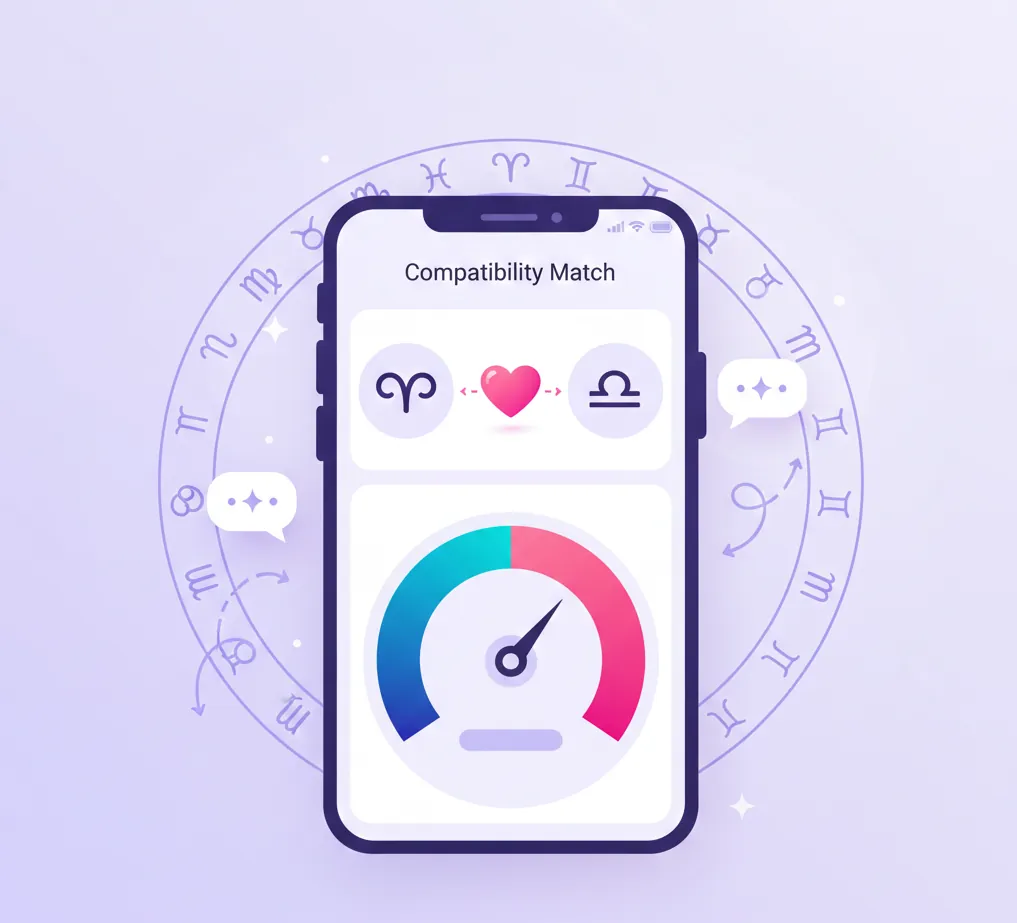
Compatibility Tools Should Encourage Conversation
In India, compatibility is often discussed through family background, values, career plans, horoscope matching, location, finances, and emotional maturity. A calculator can be a light starting point. It cannot decide the quality of a relationship.
A Pune Match Score That Missed the Real Question
Two working professionals in Pune have families comparing kundli points before marriage. The match score is decent, but they disagree strongly on whether to live with parents after marriage and how to manage money. The calculator says one thing; real life says another issue needs discussion.
Using a Score to Avoid Hard Conversations
People use a score to avoid a difficult conversation. A high score cannot fix disrespect, poor communication, hidden debt, or incompatible life plans.
Another mistake is rejecting someone purely because a simple online score is low, even when both people are mature and aligned on important values.
Let Compatibility Open the Discussion
Use compatibility as a prompt. Discuss finances, career moves, family responsibilities, children, religion, city preference, lifestyle, and conflict style.
If families value traditional matching, combine it with honest conversations and, where needed, professional counselling before marriage.
What Should Decide the Relationship
Let the calculator open the topic, not close it. A good match needs respect, clarity, and shared expectations. A number can be interesting; behaviour is decisive.
Relationship Reflection Tools
The Final Takeaway
A high compatibility score is encouraging, but shared values sustain a marriage.
Suggested Action
Discuss financial goals and family expectations rather than relying solely on the stars.
The Appeal of Compatibility Astrology in the Indian Context
Few uses of astrology have as long or as culturally embedded a history in India as compatibility assessment. Kundali matching — the Vedic astrological process of comparing two birth charts for marital compatibility — has been central to arranged marriage decision-making for centuries and continues to be consulted by a significant proportion of Indian families today, across urban and rural settings, high and low educational backgrounds.
Modern compatibility checking tools offer a lighter, more casual version of this cultural practice: a quick sign-based comparison that surfaces broad thematic compatibility notes without the complexity of full chart analysis. These tools serve curiosity, casual relationships, and the universal desire to understand how two personalities might interact — approached as entertainment and reflection, not as binding assessments.
Traditional Guna Milan: The Vedic Marriage Compatibility Framework
Traditional kundali compatibility assessment in India uses the Ashtakoot guna milan — a points-based scoring system that evaluates eight specific categories of compatibility (koots) between two charts, assigning points in each. The maximum possible score is 36. Most astrologers consider 18/36 or above acceptable for marriage; below 18 is traditionally considered less compatible. Above 24 is considered excellent.
The eight koots and their maximum points: Varna (1 point — spiritual compatibility), Vashya (2 — dominance compatibility), Tara (3 — birth star compatibility), Yoni (4 — sexual/physical compatibility), Graha Maitri (5 — psychological compatibility based on moon sign rulers), Gana (6 — nature compatibility, divine/human/demon classification of nakshatras), Bhakoot (7 — love and relationship), and Nadi (8 — genetic/biological compatibility).
Each koot has specific calculation rules based on the moon signs and nakshatras of the two individuals. The Nadi koot, which carries the most points and is sometimes treated as the primary indicator, is believed in traditional practice to relate to genetic and constitutional compatibility. Certain combinations are traditionally considered inauspicious regardless of total score — these are called dosha (notably Nadi Dosha, Bhakoot Dosha, and Gana Dosha).
What Simplified Compatibility Tools Actually Calculate
Online compatibility tools including this one work from sun signs or moon signs rather than full birth charts. The comparison produced is based on the elemental and modal relationships between the two signs — their elemental group (fire, earth, air, water signs) and their modality (cardinal, fixed, mutable). These are meaningful frameworks within astrology tradition, but they represent a small fraction of what full kundali matching considers.
In Western astrology's elemental framework: fire signs (Aries, Leo, Sagittarius) are traditionally compatible with air signs (Gemini, Libra, Aquarius); earth signs (Taurus, Virgo, Capricorn) with water signs (Cancer, Scorpio, Pisces). Signs of the same element are generally harmonious. Signs that are square (90 degrees apart, three signs away) are associated with tension. Signs that are opposite (180 degrees, six signs apart) can be complementary or challenging depending on tradition and interpreter.
These are thematic generalizations — useful as conversation starters and reflection prompts, not as scientific relationship predictors. Real relationship compatibility is determined by shared values, emotional intelligence, communication quality, mutual respect, and practical life compatibility — none of which are detectable by any astrological system.
Using Compatibility Results Responsibly
The most problematic use of any compatibility tool — astrological or otherwise — is allowing a low-compatibility result to discourage a genuinely good relationship, or allowing a high-compatibility result to project unfounded optimism onto a relationship that lacks essential real-world foundations. Both errors represent misuse of an entertainment and reflection tool as a decision-making authority it was never designed to be.
The most personally valuable use of compatibility reference content is as a conversation catalyst. If a compatibility description notes that two signs may differ in communication style or emotional expressiveness, the useful response is to have an actual conversation about those specific dynamics with the person — not to accept the description as a verdict.
Astrological compatibility is not scientifically validated as a predictor of relationship success or longevity. This content is for entertainment and cultural reflection. Relationship decisions should be based on genuine knowledge of the other person, shared values, open communication, and appropriate professional guidance when needed.